Pickleball has exploded in popularity across the United States, transforming quiet neighborhood courts into vibrant hubs of competition, laughter, and friendly rivalry. Whether you’ve seen it played at a local park or heard about it from friends, you may be wondering what all the excitement is about. At its core, pickleball is a paddle sport that blends elements of tennis, badminton, and table tennis into a fast-moving yet highly accessible game. It’s easy to learn, engaging for beginners, and competitive enough to challenge seasoned athletes. Understanding the rules of pickleball is the key to enjoying the game confidently and fairly. For newcomers, the sport can seem simple at first glance, but like any competitive activity, it has specific regulations that shape how points are scored, how serves are delivered, and how players move strategically across the court. This complete beginner’s guide breaks down pickleball rules in a clear, practical way so you can step onto the court ready to play.
A: The 7-foot non-volley zone near the net where volleys aren’t allowed.
A: Yes, just don’t volley while inside it.
A: Serve bounces, return bounces, then volleys are allowed.
A: Server score, receiver score, server number.
A: Only the serving team in traditional scoring.
A: Yes, except a serve landing on the kitchen line.
A: Volleying too early or stepping into the kitchen.
A: Hit deep, move up calmly, keep balls low.
A: It forces opponents to hit up, creating attack chances.
A: More court to cover and fewer recovery opportunities.
Understanding the Court and Essential Equipment
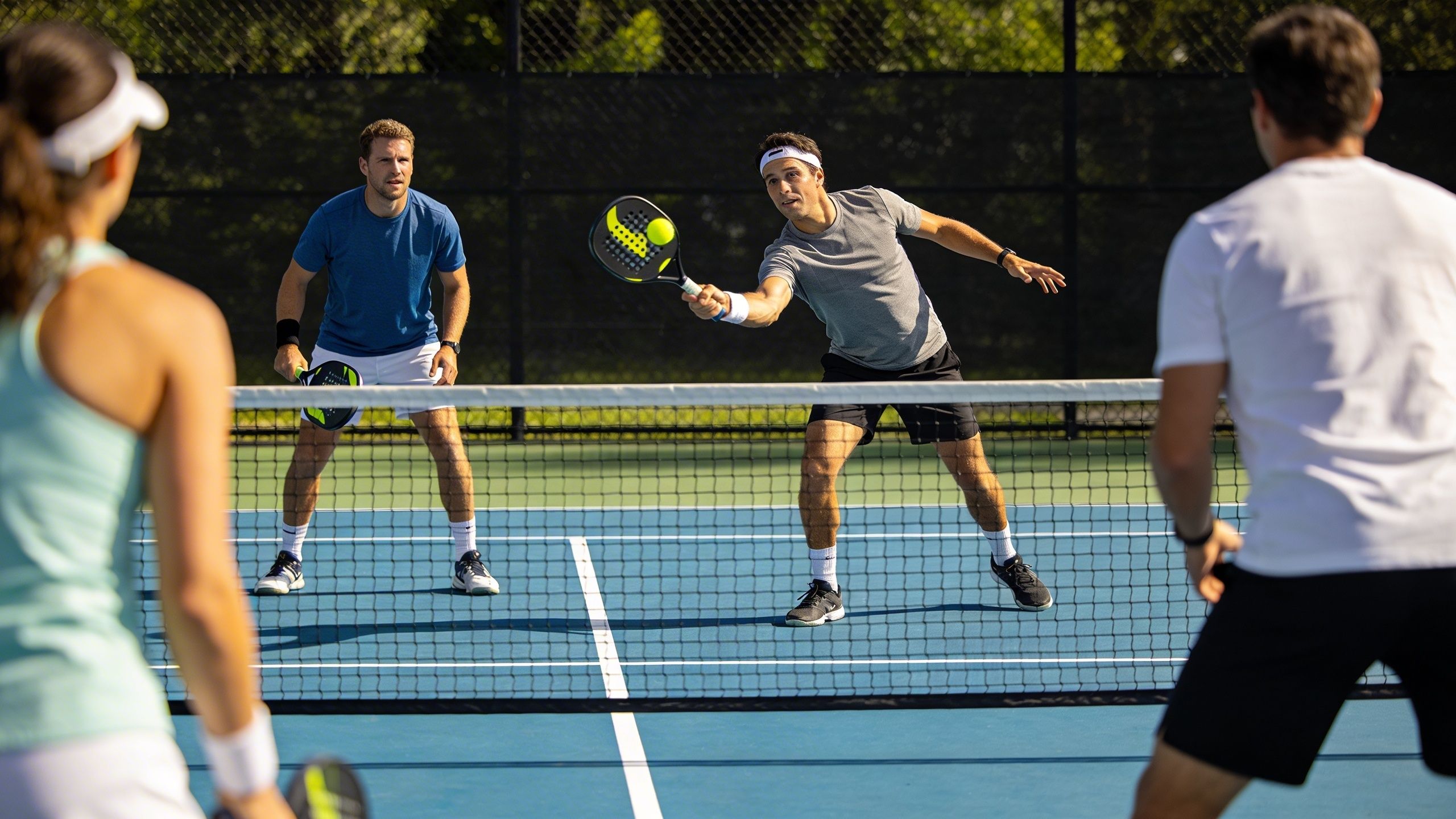
Before diving into the rules, it’s important to understand the playing environment. A pickleball court is 20 feet wide and 44 feet long for both singles and doubles play. While it resembles a smaller tennis court, its unique feature is the non-volley zone, commonly called “the kitchen.” This seven-foot area on both sides of the net prevents players from smashing the ball too close to the net and encourages more strategic play.
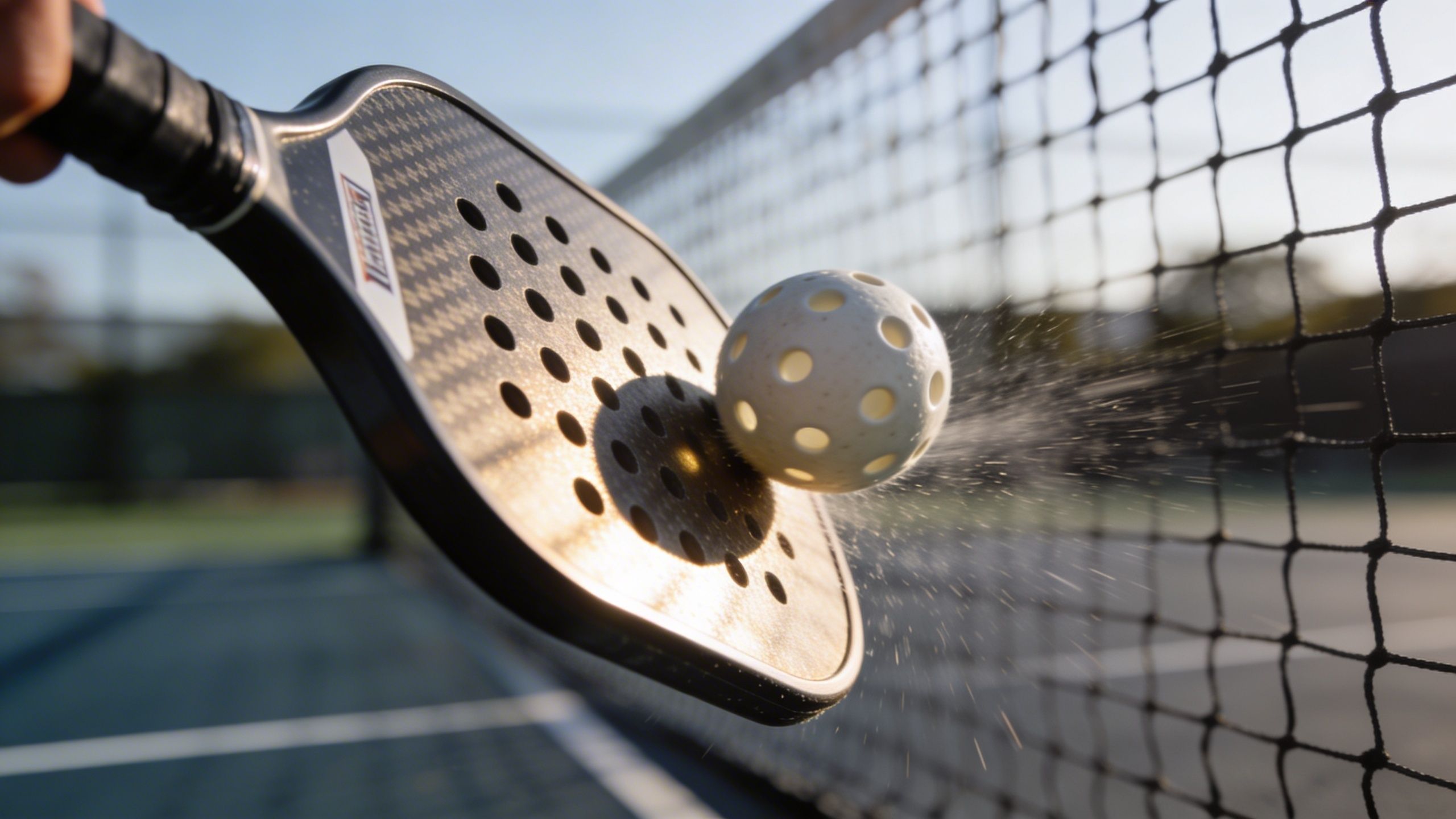
The net is slightly lower than a tennis net, measuring 36 inches high at the sidelines and 34 inches at the center. This subtle difference influences shot selection and ball trajectory. The ball itself is lightweight and perforated, similar to a wiffle ball, which allows for controlled rallies and softer touch shots.
Players use solid paddles made from composite materials such as graphite or polymer cores. Unlike tennis racquets, pickleball paddles have no strings, creating a firmer, more precise contact surface. Understanding this equipment helps explain why certain rules exist, especially those involving volleys and controlled placement.
The Serve: Starting Each Rally the Right Way
Every pickleball rally begins with a serve, and the serving rules are among the most important to master as a beginner. The serve must be made underhand, with the paddle contacting the ball below the server’s waist. Additionally, the paddle head must be below the wrist at the point of contact. These requirements prevent overpowered serves and maintain the game’s balance.
The serve is made diagonally across the court into the opponent’s service area. At least one foot must remain behind the baseline during the serve, and the ball must clear the non-volley zone before landing in the proper service box. If it lands in the kitchen or outside the designated service area, it results in a fault.
In doubles play, each team gets two serves per side, except at the start of the game, when only one server begins. The serve alternates between partners after each fault until both players have served. In singles, the same player continues serving until a fault occurs. Keeping track of serving order is essential, as incorrect rotation can lead to confusion and lost points.
The Double Bounce Rule and Building Fair Rallies
One of the defining rules of pickleball is the double bounce rule. After the serve, the receiving team must let the ball bounce once before returning it. Then, the serving team must also allow the return to bounce before hitting it. Only after these two bounces can either side begin volleying the ball in the air.
This rule prevents aggressive net rushing immediately after the serve and ensures longer rallies. It creates a more balanced game, especially for beginners who are still developing timing and positioning skills. Once the double bounce has occurred, players can hit volleys as long as they remain outside the non-volley zone.
The double bounce rule is fundamental to understanding pickleball strategy. It promotes patience and encourages players to think two or three shots ahead rather than relying solely on power.
The Kitchen: Mastering the Non-Volley Zone
The non-volley zone, or kitchen, is perhaps the most misunderstood part of pickleball for new players. This area extends seven feet from the net on both sides and prohibits players from volleying the ball while standing inside it. In other words, you cannot hit the ball out of the air if your feet are touching the kitchen or its boundary lines.
However, players are allowed to enter the kitchen to play a ball that has bounced. This nuance is important. You can step into the non-volley zone after the ball bounces, but you must exit before attempting a volley. Additionally, your momentum cannot carry you into the kitchen after volleying the ball outside of it.
The kitchen rule prevents overpowering smashes at the net and encourages softer, controlled shots known as “dinks.” These gentle, strategic shots are placed just over the net into the opponent’s kitchen, forcing them into difficult returns. Learning how to manage the non-volley zone is one of the most critical skills for beginners.
Scoring Simplified: How Points Are Earned
Pickleball scoring can feel confusing at first, especially in doubles. In standard games played to 11 points, a team must win by at least two points. Only the serving team can score points. If the serving team commits a fault, the serve passes to the next server or the opposing team.
In doubles, the score is announced as three numbers: the serving team’s score, the receiving team’s score, and the server number (either 1 or 2). For example, a score call of 5-3-1 means the serving team has 5 points, the receiving team has 3 points, and it is the first server’s turn.
In singles play, scoring is simpler. The score is called with just two numbers, and the server serves from the right side when their score is even and from the left when it is odd. This system keeps service rotation consistent and easier to track.
Understanding when and how points are earned helps players maintain focus and avoid disputes. Clear score communication is a hallmark of good sportsmanship in pickleball.
Faults, Let Calls, and Common Mistakes
A fault occurs when a rule is violated, ending the rally. Common faults include hitting the ball out of bounds, failing to clear the net, volleying from within the kitchen, or serving improperly. Stepping on the baseline while serving or contacting the ball above the waist during a serve also results in a fault.
If the ball lands on a line, it is generally considered in bounds, except for the non-volley zone line during a serve. If a served ball touches the kitchen line, it is a fault.
Let calls, which once applied to serves that clipped the net and landed in the correct service area, have largely been eliminated in modern play. Today, if the ball hits the net and lands properly, it remains in play. This rule speeds up the game and reduces unnecessary interruptions.
For beginners, awareness of common mistakes accelerates learning. Most faults occur due to foot placement or misunderstanding the kitchen rule, so paying close attention to positioning can significantly improve gameplay.
Singles vs. Doubles: Key Rule Differences
While the court dimensions remain the same, singles and doubles pickleball differ in movement and strategy. In singles, players must cover the entire court alone, making agility and stamina crucial. The serving rules are simpler, and there is no partner rotation to manage.
Doubles is the more commonly played format and emphasizes teamwork, communication, and positioning. Partners typically move together toward the net after the double bounce rule is satisfied. Coordinated movement ensures coverage of the court while maintaining strong net presence.
The rules themselves do not change dramatically between formats, but the way they are applied in gameplay does. Understanding these subtle differences helps beginners adapt quickly whether playing casually or in competitive settings.
Strategy and Sportsmanship: Playing the Game the Right Way
Pickleball is as much about strategy and respect as it is about rules. Successful players focus on placement rather than power. Dinking, controlled volleys, and patient rallies often outperform aggressive swings. Learning when to approach the net and when to stay back can transform your performance.
Equally important is sportsmanship. Calling lines honestly, announcing scores clearly, and respecting opponents are foundational principles of the game. Many pickleball communities emphasize friendliness and inclusivity, making it welcoming for players of all ages.
As you become more comfortable with the rules, you’ll discover that pickleball rewards thoughtful play. Mastering fundamentals builds confidence, and confidence fosters enjoyment.
Stepping Onto the Court With Confidence
Learning pickleball rules doesn’t require memorizing complex regulations or navigating overwhelming details. The game thrives on simplicity, fairness, and accessibility. By understanding the serve, the double bounce rule, the non-volley zone, scoring systems, and common faults, beginners can quickly transition from spectators to active participants. The beauty of pickleball lies in its balance. It’s competitive yet social, strategic yet beginner-friendly. With just a paddle, a ball, and a basic understanding of the rules, you can join one of the fastest-growing sports communities in the country. Now that you know the rules, the next step is stepping onto the court. Practice your serve, respect the kitchen, communicate the score clearly, and most importantly, enjoy the game. Pickleball is not just about winning points; it’s about building rallies, friendships, and confidence with every swing.