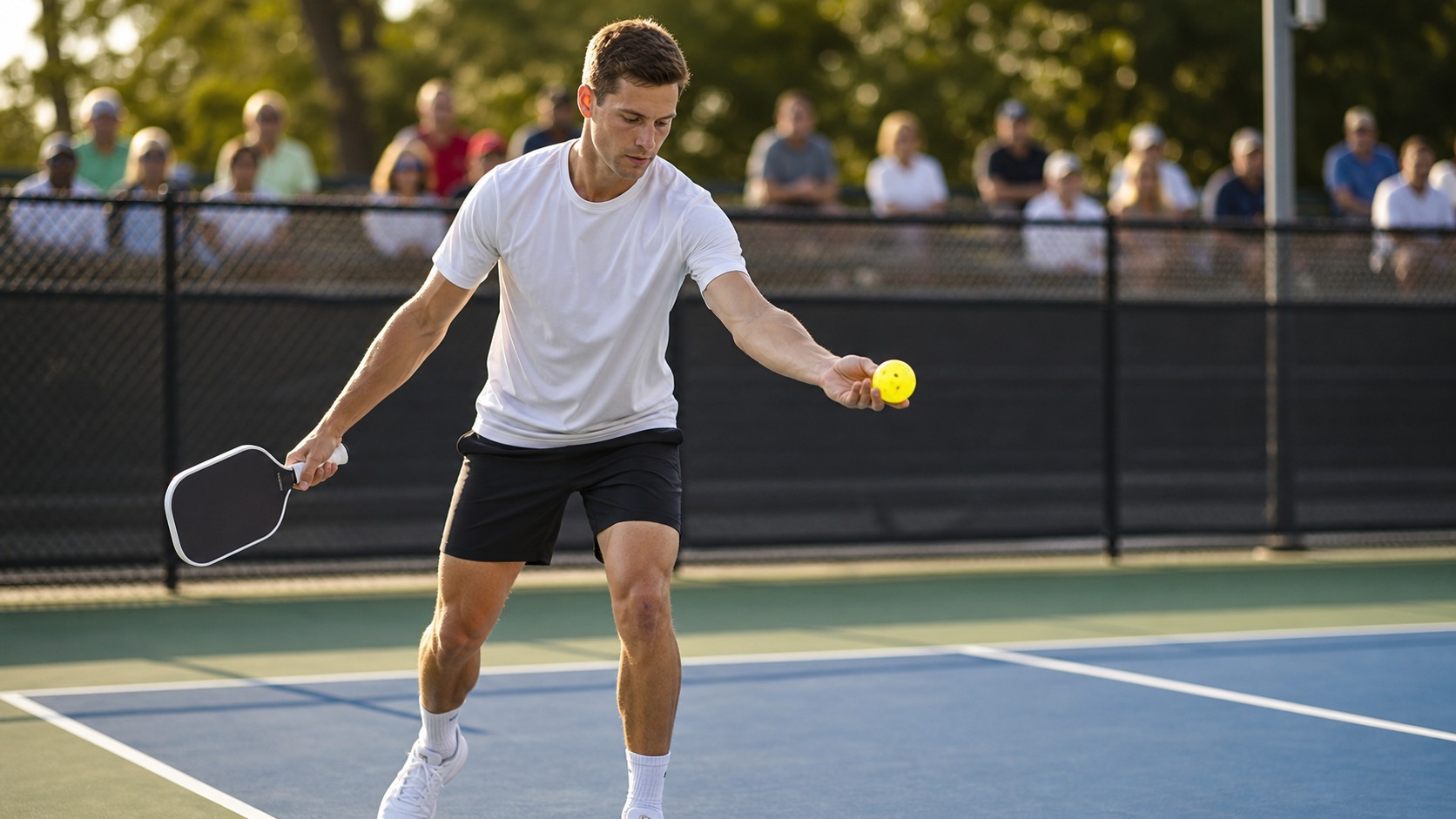
Deep Serve Accuracy Explained Step by Step gives players a focused way to improve the opening shot without making serving feel complicated. The serve is the only stroke that begins fully under your control, which makes it a perfect place to build confidence. This guide focuses on deep serve placement, using practical cues that help you push the returner back without losing accuracy in real games.
A: Begin with one target and one cue connected to deep serve placement.
A: It helps you push the returner back without losing accuracy while staying ready for the return.
A: No. Add speed after the serve lands where planned.
A: Use short sets and review the miss pattern before adding more.
A: Lower the finish, reduce lift, or choose a safer target.
A: Keep the swing moving through contact and avoid steering.
A: Yes. A predictable serve gives your partner a cleaner point to read.
A: Only if it supports placement and legal contact.
A: A comfortable paddle grip and court shoes matter more than gimmicks.
A: Change when the returner adapts, not because of one ordinary miss.
What Deep Serve Accuracy Explained Step by Step Means During Real Play
The best serve is not always the fastest one. It is the serve that starts the point with purpose. For Deep Serve Accuracy Explained Step by Step, that means choosing a target, using a motion you can repeat, and finishing balanced enough to read the return. When those pieces work together, the serve becomes more than a formality. It becomes the first decision in the rally.
Match Speed to Purpose for Deep Serve Accuracy Explained Step by Step
Speed is helpful only when it supports the plan. A powerful serve that misses long or drifts into the opponent?s favorite return is not pressure. A slightly slower serve that lands deep, pulls the returner wide, or protects legal form often starts a better point. Keep this tied to deep serve placement, not to a vague desire to serve harder. The clearer the purpose, the easier it is to practice and the easier it is to trust during a match.
A useful court check is simple: did the serve land near the chosen zone, did your body finish under control, and did the returner have to solve the problem you intended? If the answer is no, adjust the smallest piece first. For Deep Serve Accuracy Explained Step by Step, small corrections usually work better than rebuilding the whole motion after one miss.
Read the Miss Pattern for Deep Serve Accuracy Explained Step by Step
Long misses usually point to too much lift, late acceleration, or a finish that keeps rising. Short misses often reveal hesitation. Side misses can mean the paddle face or body line changed near contact. Instead of calling misses random, name the pattern and adjust one detail. Keep this tied to deep serve placement, not to a vague desire to serve harder. The clearer the purpose, the easier it is to practice and the easier it is to trust during a match.
A useful court check is simple: did the serve land near the chosen zone, did your body finish under control, and did the returner have to solve the problem you intended? If the answer is no, adjust the smallest piece first. For Deep Serve Accuracy Explained Step by Step, small corrections usually work better than rebuilding the whole motion after one miss.
Practice in Short Sets for Deep Serve Accuracy Explained Step by Step
Short sets create better feedback than endless serving. Try five serves to one target, pause, and judge only the result you planned. Then repeat with a small adjustment. This keeps practice focused and makes improvement easier to carry into normal games. Keep this tied to deep serve placement, not to a vague desire to serve harder. The clearer the purpose, the easier it is to practice and the easier it is to trust during a match.
A useful court check is simple: did the serve land near the chosen zone, did your body finish under control, and did the returner have to solve the problem you intended? If the answer is no, adjust the smallest piece first. For Deep Serve Accuracy Explained Step by Step, small corrections usually work better than rebuilding the whole motion after one miss.
Connect the Serve to the Return for Deep Serve Accuracy Explained Step by Step
The serve is not finished when it lands in. It is finished when it creates a return you can handle. Watch the returner?s feet, paddle angle, and timing. If the serve makes the return rushed or predictable, it is doing useful work even without looking spectacular. Keep this tied to deep serve placement, not to a vague desire to serve harder. The clearer the purpose, the easier it is to practice and the easier it is to trust during a match.
A useful court check is simple: did the serve land near the chosen zone, did your body finish under control, and did the returner have to solve the problem you intended? If the answer is no, adjust the smallest piece first. For Deep Serve Accuracy Explained Step by Step, small corrections usually work better than rebuilding the whole motion after one miss.
Use It Under Score Pressure for Deep Serve Accuracy Explained Step by Step
A serve that works only during quiet practice is not ready. Test it after a long rally, after a miss, and when the score feels tight. In those moments, simplify the motion and trust the target. Reliable serving comes from a plan you can still follow when the game gets noisy. Keep this tied to deep serve placement, not to a vague desire to serve harder. The clearer the purpose, the easier it is to practice and the easier it is to trust during a match.
A useful court check is simple: did the serve land near the chosen zone, did your body finish under control, and did the returner have to solve the problem you intended? If the answer is no, adjust the smallest piece first. For Deep Serve Accuracy Explained Step by Step, small corrections usually work better than rebuilding the whole motion after one miss.
Set the Target First for Deep Serve Accuracy Explained Step by Step
Before the paddle moves, choose the landing area and the return you want to invite. That single decision keeps the serve from becoming a hopeful swing. For this topic, the target should match the purpose: depth, spin, power, legality, or placement. When the target is clear, the body has a job and the miss becomes easier to diagnose. Keep this tied to deep serve placement, not to a vague desire to serve harder. The clearer the purpose, the easier it is to practice and the easier it is to trust during a match.
A useful court check is simple: did the serve land near the chosen zone, did your body finish under control, and did the returner have to solve the problem you intended? If the answer is no, adjust the smallest piece first. For Deep Serve Accuracy Explained Step by Step, small corrections usually work better than rebuilding the whole motion after one miss.
Build a Repeatable Start for Deep Serve Accuracy Explained Step by Step
A good serve begins with the same small routine each time. Step behind the line, settle the grip, breathe once, and look at the target. This does not need to be dramatic. It only needs to be consistent enough that pressure does not change the first three seconds of the serve. Keep this tied to deep serve placement, not to a vague desire to serve harder. The clearer the purpose, the easier it is to practice and the easier it is to trust during a match.
A useful court check is simple: did the serve land near the chosen zone, did your body finish under control, and did the returner have to solve the problem you intended? If the answer is no, adjust the smallest piece first. For Deep Serve Accuracy Explained Step by Step, small corrections usually work better than rebuilding the whole motion after one miss.
Keep Contact Predictable for Deep Serve Accuracy Explained Step by Step
Most serve problems show up at contact. The paddle face turns late, the ball drop wanders, or the swing speeds up before the player is balanced. Predictable contact is not boring; it is the foundation that lets power, spin, and placement become useful instead of random. Keep this tied to deep serve placement, not to a vague desire to serve harder. The clearer the purpose, the easier it is to practice and the easier it is to trust during a match.
A useful court check is simple: did the serve land near the chosen zone, did your body finish under control, and did the returner have to solve the problem you intended? If the answer is no, adjust the smallest piece first. For Deep Serve Accuracy Explained Step by Step, small corrections usually work better than rebuilding the whole motion after one miss.
A Simple Practice Plan for Deep Serve Accuracy Explained Step by Step
Use three short rounds. In round one, serve only for the landing zone. In round two, keep the same target while watching balance and contact. In round three, imagine a real returner and move after the serve. That sequence turns Deep Serve Accuracy Explained Step by Step into a practical habit instead of a loose idea. The goal is not perfection. The goal is a serve you can repeat, understand, and bring into the next game without hesitation.
For Deep Serve Accuracy Explained Step by Step, the final layer is patience. One good serve does not prove the skill, and one bad serve does not erase it. Track the pattern over several attempts. If the ball keeps missing the same way, the serve is giving you useful information. If the return keeps becoming easier to read, the serve is already helping the point.
For Deep Serve Accuracy Explained Step by Step, the final layer is patience. One good serve does not prove the skill, and one bad serve does not erase it. Track the pattern over several attempts. If the ball keeps missing the same way, the serve is giving you useful information. If the return keeps becoming easier to read, the serve is already helping the point.
For Deep Serve Accuracy Explained Step by Step, the final layer is patience. One good serve does not prove the skill, and one bad serve does not erase it. Track the pattern over several attempts. If the ball keeps missing the same way, the serve is giving you useful information. If the return keeps becoming easier to read, the serve is already helping the point.
For Deep Serve Accuracy Explained Step by Step, the final layer is patience. One good serve does not prove the skill, and one bad serve does not erase it. Track the pattern over several attempts. If the ball keeps missing the same way, the serve is giving you useful information. If the return keeps becoming easier to read, the serve is already helping the point.
For Deep Serve Accuracy Explained Step by Step, the final layer is patience. One good serve does not prove the skill, and one bad serve does not erase it. Track the pattern over several attempts. If the ball keeps missing the same way, the serve is giving you useful information. If the return keeps becoming easier to read, the serve is already helping the point.
For Deep Serve Accuracy Explained Step by Step, the final layer is patience. One good serve does not prove the skill, and one bad serve does not erase it. Track the pattern over several attempts. If the ball keeps missing the same way, the serve is giving you useful information. If the return keeps becoming easier to read, the serve is already helping the point.